✦ FEATURED EBOOK The Unwanted Marriage → PDF + EPUB

Classic Self-Help Books Worth Reading Today: 6 Picks
A thoughtful guide to six classic self-help books, comparing their approaches to focus, time, ambition and personal growth without overpromising.

Some personal-growth books remain in circulation for decades because they ask enduring questions. How do our thoughts shape what we notice? Where does an ordinary day go? What separates a motivating idea from a useful practice? The best way to read classic self-help books is neither to accept every claim nor to dismiss an older text because its language feels dated.
These six titles invite different kinds of reflection. Some focus on attention and everyday routines; others carry the optimism and business assumptions of the late nineteenth and early twentieth centuries. Treat them as historical arguments to test against experience and modern evidence, not as guarantees of wealth, health or success.
Why read classic personal-development books now?
Older advice can make familiar problems feel new again. A writer working before smartphones may still describe distraction, scattered effort and the gap between intention and action. At the same time, the era matters: the authors often assume particular social opportunities, economic conditions and definitions of success. Reading critically allows you to keep the useful questions while setting aside unsupported claims.
It also helps to distinguish self-reflection from evidence. A memorable sentence about attitude may inspire better habits, but it does not prove that thoughts alone cause external events. Apply the ideas as prompts for observation and deliberate action, with room for setbacks and circumstances beyond individual control.
1. As a Man Thinketh — James Allen
As a Man Thinketh is a compact meditation on how habitual thinking relates to character and conduct. Its memorable style is one reason it remains approachable. You can read it quickly and return to the passages that provoke questions about responsibility, attention and inner narratives.
The book is strongest as an invitation to examine repeated patterns: Which ideas shape how you approach a problem? Which assumptions make you give up early? It becomes less reliable if treated as a literal rule that every hardship is self-created. Social conditions, health and chance also matter.
2. How to Live on 24 Hours a Day — Arnold Bennett
Arnold Bennett’s How to Live on 24 Hours a Day is an appealing read for people who feel their day disappears before they get to their interests. His argument begins with a simple observation: everyone receives the same twenty-four hours, although people’s obligations and resources are not the same.
Read this for the idea of protecting small, purposeful periods of attention. You might dedicate a modest evening block to reading rather than waiting for the perfect free weekend. Modern schedules differ significantly, and the book’s advice should be adapted to caregiving, shift work and the need for rest.
3. The Power of Concentration — Theron Q. Dumont
The Power of Concentration treats sustained attention as a skill worth cultivating. That remains a useful topic in an age of constant notifications. The text mixes practical encouragement with period-specific language and claims, so take its techniques as experiments rather than established scientific treatments.
A gentle reading exercise is to choose one task, define what finishing means and notice how often you switch away. Keep the goal realistic; the value is in learning what interrupts your attention, not criticizing yourself for every wandering thought.
4. Acres of Diamonds — Russell H. Conwell
The central image in Acres of Diamonds invites readers to reconsider opportunities close to home. It is part of a longstanding tradition of motivational lectures about initiative and resourcefulness.
The lasting question is productive: Have you overlooked people, skills or projects already within reach? But the wider message should be read in its historical context. Opportunity is not distributed equally, and a persuasive story is not proof that prosperity is available to everyone on the same terms.
5. The Science of Getting Rich — Wallace D. Wattles
The Science of Getting Rich is an influential example of New Thought-era success writing. It presents a philosophy of prosperity that many modern readers will recognize from later motivational literature.
Despite its title, it is not a scientific manual or a substitute for professional financial advice. Read it to understand a historical approach to ambition and belief, then separate its uplifting language from claims that have not been established by evidence. It is especially interesting alongside more practical discussions of habits and work.
6. The Art of Money Getting — P. T. Barnum
P. T. Barnum’s The Art of Money Getting offers nineteenth-century reflections on enterprise, thrift and reputation. The attraction is partly historical: it shows how a prominent showman framed practical conduct and commercial life.
Some advice is recognizable today, while other assumptions reflect the business world in which it was written. Enjoy the text as a primary source for an earlier era of commerce rather than a current financial playbook.
Which classic self-help book matches your goal?
- More thoughtful self-talk: As a Man Thinketh.
- A daily reading or learning routine: How to Live on 24 Hours a Day.
- Focus and sustained effort: The Power of Concentration.
- Reflecting on nearby opportunities: Acres of Diamonds.
- Understanding prosperity literature: The Science of Getting Rich.
- Historical business wisdom: The Art of Money Getting.
A three-step way to read them critically
First, identify one concrete claim. Is the author describing a habit you could try, making a moral argument or asserting that an outcome is guaranteed? Those are different kinds of statements and require different levels of trust.
Second, note the historical assumptions. Ask who had access to leisure, employment and education when the book was written. A method suitable for one reader may be unrealistic or unfair to another.
Third, test a modest idea. Try a ten-minute reading window or one focused work period, then decide whether it helped. Avoid grand promises. Meaningful changes usually involve context, flexibility and repeated adjustment.
Explore the original classics as ebooks
The VERSOVISTA editions below let you pick the specific voice that interests you, rather than buying a generic bundle without knowing the contents. Open a title to read its edition details and available formats.
Six personal-growth classics to explore
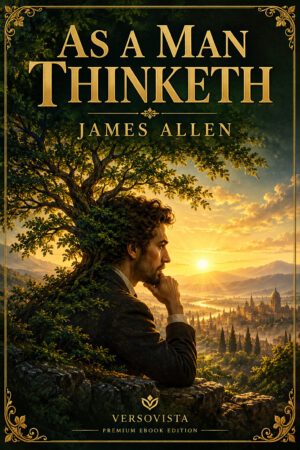 As a Man ThinkethEXPLORE EBOOK →
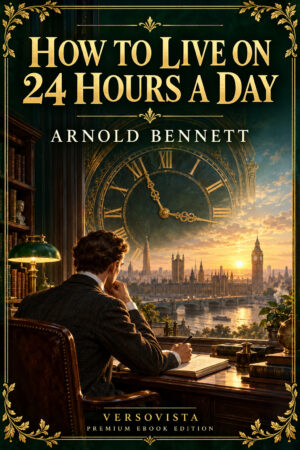 How to Live on 24 Hours a DayEXPLORE EBOOK →
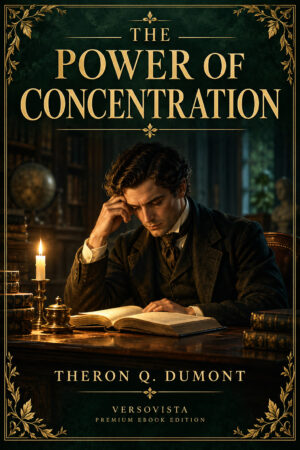 The Power of ConcentrationEXPLORE EBOOK →
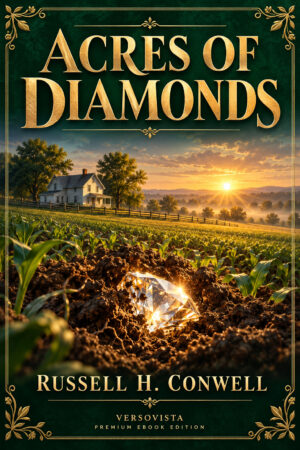 Acres of DiamondsEXPLORE EBOOK →
 The Science of Getting RichEXPLORE EBOOK →
 The Art of Money GettingEXPLORE EBOOK →
Check the book page for the edition description and available download formats.
Frequently asked questions
Are older self-help books still relevant?
Many raise useful questions about attention, time and values. Their more sweeping claims should be checked against present-day evidence and personal circumstances.
Which is easiest for a beginner?
As a Man Thinketh is brief and reflective; How to Live on 24 Hours a Day is a practical choice for readers interested in daily routines.
Will these books guarantee personal or financial success?
No book can make that guarantee. Read them as historical perspectives and possible prompts for thoughtful experiments, not promises of results.
More reading paths
If your interests lean toward ethics and philosophy, try our comparison of Meditations and The Art of War. To make a sustainable reading routine, see how to build a digital reading habit.