✦ FEATURED EBOOK The Unwanted Marriage → PDF + EPUB

Best Jules Verne Books to Start With: A Reading Guide
A spoiler-free beginner’s guide to Jules Verne: choose underground exploration, ocean discovery, or a survival story, with ebooks linked.

Jules Verne wrote stories in which the urge to discover becomes an adventure: a map is studied, an unlikely journey begins and the familiar world starts to feel astonishing. For newcomers, the question is not only which Jules Verne book is best, but which kind of voyage you would most enjoy reading.
Three approachable options show his range: a journey beneath the Earth, a voyage under the sea and a story of survival and invention. They share a fascination with science and exploration, but each delivers a different reading experience.
1. A Journey to the Centre of the Earth: begin with discovery
In A Journey to the Centre of the Earth, an old document inspires a professor and his companions to attempt an extraordinary expedition. Much of the book’s pleasure lies in their preparations, disagreements and growing realization that the natural world may be stranger than they expected.
The narrator’s reactions make this one especially friendly to a first-time Verne reader. He does not approach every danger with serene confidence; doubt, discomfort and wonder all play a role. The result is an adventure that feels personal even when the geography becomes fantastic.
Choose it if you like puzzles, old maps and journeys where curiosity matters as much as courage. Be aware that Verne’s scientific explanations reflect the knowledge and imaginative speculation of his century, not a modern geology textbook.
2. Twenty Thousand Leagues Under the Sea: explore the ocean
Twenty Thousand Leagues Under the Sea follows Professor Aronnax and others who encounter the remarkable submarine Nautilus and its enigmatic commander, Captain Nemo. The novel combines scenes of marine beauty with questions about freedom, isolation and the uses of technology.
It is a good choice if you enjoy descriptive writing and an immersive setting. The ocean is more than scenery: it becomes a world with its own rhythms, hazards and forms of life. Nemo’s character gives the adventure an emotional shadow, inviting readers to wonder what a person might gain or lose by withdrawing from society.
The title’s leagues refer to distance traveled under the sea, not the depth of the submarine. That common point of confusion can make the book sound quite different from the voyage Verne actually describes.
3. The Mysterious Island: survival, invention and community
In The Mysterious Island, castaways must find food, shelter and ways to understand a new environment. Instead of one vehicle carrying explorers into the unknown, the central appeal is a group of people using observation, labor and ingenuity to make a place habitable.
The pleasure here is cumulative. Small practical decisions add up into an unfolding account of settlement, cooperation and discovery. If you love stories about making tools, solving everyday problems and turning scarce resources into possibilities, this may become your favorite Verne adventure.
For the richest connections to Verne’s broader imaginative world, many readers prefer to reach this book after some of his other adventures, including Twenty Thousand Leagues Under the Sea. It can still be enjoyed as a survival narrative on its own, but later connections are more rewarding with that context.
A good Jules Verne reading order for beginners
- Start with A Journey to the Centre of the Earth for a compact taste of discovery and a memorable narrative voice.
- Continue with Twenty Thousand Leagues Under the Sea for a more reflective, ocean-spanning adventure.
- Then read The Mysterious Island for survival, invention and connections to Verne’s wider stories.
This is a beginner-friendly selection rather than a definitive chronology. Verne wrote many more works, and the best sequence depends on whether you want fast movement, atmospheric description or the satisfaction of watching characters build something.
What makes Jules Verne different from modern science fiction?
Verne’s stories often treat technical explanations as part of the adventure itself. Machinery, geography and natural history are described with a sense of astonishment that reflects the era’s interest in scientific progress. Contemporary readers may find these passages slower than a modern thriller, but they also reveal why the inventions captured imaginations.
It helps to separate the story’s imaginative logic from present-day scientific accuracy. Some ideas were speculative at the time and others have been superseded. Enjoy the blend of research, invention and fantasy without taking every claim as a current scientific fact.
Which one suits your reading mood?
- For short chapters and expedition energy: try the underground journey.
- For ocean atmosphere and a mysterious central figure: choose the Nautilus adventure.
- For resourcefulness and a longer survival narrative: pick the island.
- For a shared family read: consider the reader’s patience for older descriptions and use a glossary when unfamiliar terms appear.
Discover the Jules Verne ebook editions
Explore the individual VERSOVISTA ebook pages below and check the formats offered for your preferred reading device. A digital edition lets you return to a map description, a character name or a fascinating passage when the next part of the voyage makes it important.
Choose your next Jules Verne adventure
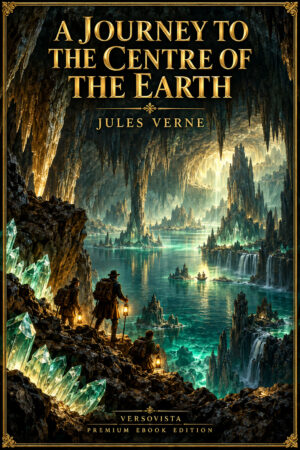 A Journey to the Centre of the EarthVIEW EBOOK →
 Twenty Thousand Leagues Under the SeaVIEW EBOOK →
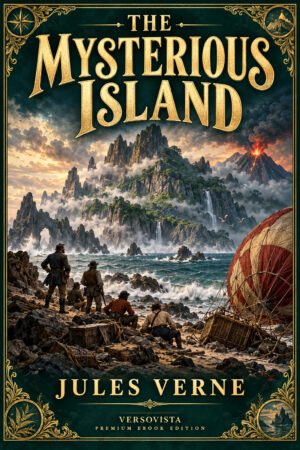 The Mysterious IslandVIEW EBOOK →
Browse the current edition details and supported digital formats on each book page.
Frequently asked questions
Should I read Twenty Thousand Leagues before The Mysterious Island?
It is a helpful sequence if you want to appreciate connections in Verne’s fictional world. You can still enjoy The Mysterious Island for its survival story independently.
Are Jules Verne’s books scientifically accurate today?
Not consistently. They reflect nineteenth-century knowledge and imagination. Reading them as literary adventures is more useful than treating them as current scientific reference.
What if I normally read short, fast-paced books?
Try A Journey to the Centre of the Earth and read in manageable sections. Our guide to getting comfortable with classic literature offers simple techniques for older prose.
Keep exploring
You might also enjoy our H. G. Wells reading guide to compare another influential writer of speculative adventures. For a broader introduction, see classic books for beginners.
[…] Related reads: Jane Austen Books in Order: Where New Readers Should Start · Best Jules Verne Books to Start With: A Reading Guide. […]